
If you train regularly, knowing how to wash boxing hand wraps properly matters, they should be washed after every session. Not occasionally. Not when they smell. Every time.
Hand wraps sit closest to your skin. They absorb sweat, bacteria, and skin oils long before your boxing gloves do. If they are not cleaned, they don’t just smell. They break down faster, irritate skin, and quietly transfer that build-up straight into your gloves.
Wraps last longer when they are treated properly. Poor care shortens their life regardless of price or brand. When wraps aren’t rotated and fully dried between sessions, wear accelerates and hygiene issues follow.
This isn’t about being precious with equipment. It’s about understanding what happens to wraps over time and stopping avoidable damage to your hands, health and kit.
What happens when you don’t wash hand wraps properly
Unwashed wraps don’t just “air out”. Sweat doesn’t evaporate cleanly. It dries into the fibres.
Over time this leads to a few predictable problems:
- Persistent odour that returns even after sprays or fresh air
- Skin irritation around knuckles and wrists, especially during long sessions
- Fibre breakdown, where wraps feel rougher and lose structure
- Cross-contamination, where gloves absorb bacteria from dirty wraps
Many fighters try to solve glove smell while ignoring wrap hygiene. In reality, gloves often smell because wraps were neglected first.
Once bacteria embeds into fabric, it becomes harder to remove. Washing early and consistently matters more than deep-cleaning later.
How to wash boxing hand wraps properly
Hand wraps can be machine washed or hand washed. The method matters less than how you do it.
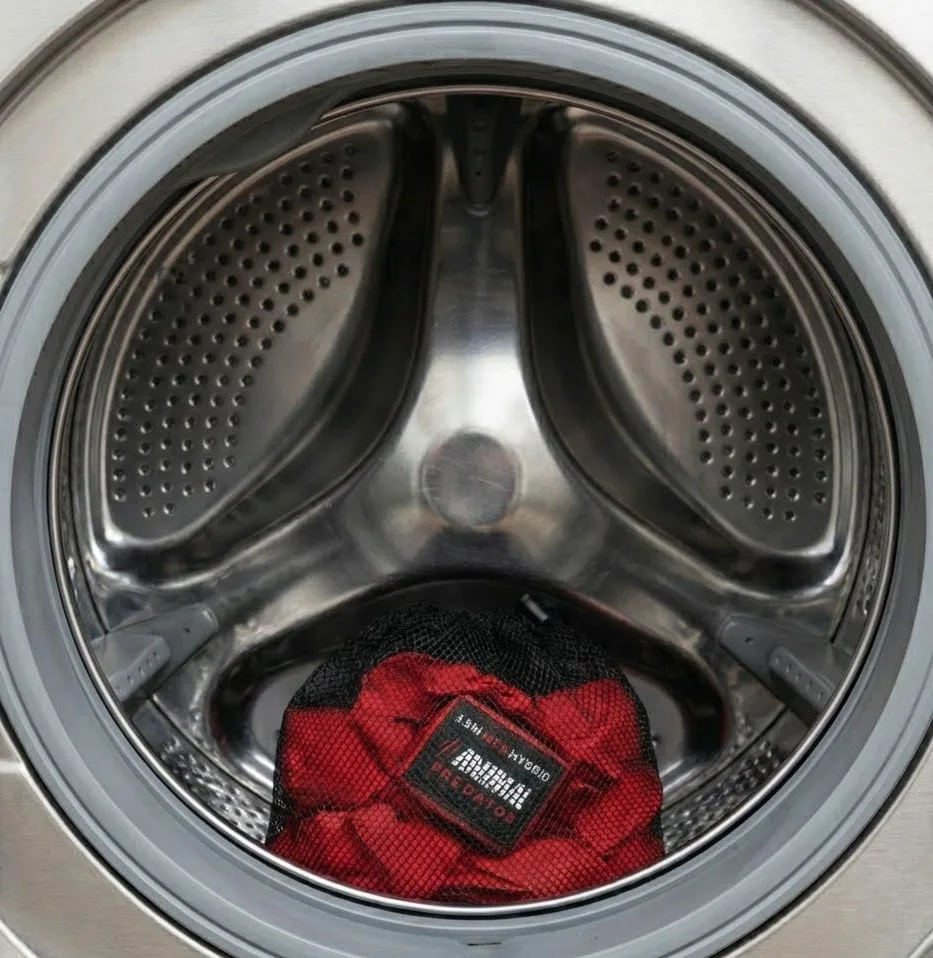
Machine washing (most practical for regular training)
Machine washing is fine for most training wraps if done correctly.
Key rules:
- Cold or cool water only
- Mild detergent (no bleach, no fabric softener)
- Use a netted laundry bag to prevent tangling
- Gentle cycle if available
Heat is the enemy of wrap longevity. Hot washes accelerate fibre fatigue and shorten elastic life, especially in wraps designed to stretch and rebound.
If your wraps come out twisted into a knot, they were not protected properly during the wash. Tangling puts unnecessary stress through the fabric and stitching.
Hand washing (useful if you train daily)
Hand washing works well if you’re washing wraps frequently and want maximum control.
- Use cool water and a small amount of detergent
- Gently agitate rather than scrubbing aggressively
- Rinse thoroughly to remove residue
Residue left in wraps is one of the reasons “clean” wraps still smell once warmed up during training.
How to dry hand wraps without ruining them
Drying is where most damage happens.
Wraps should always be air dried.
- Hang them fully extended
- Allow airflow around the fabric
- Expect several hours to dry properly
Do not tumble dry. Do not place on radiators. Do not speed-dry with heat.
Heat damages elasticity and accelerates shrinkage. Wraps that once moulded naturally around the hand begin to feel stiff, uneven, or loose in the wrong places. This is often blamed on “cheap wraps” when it is actually a drying mistake.
Wraps that still feel slightly damp should not be re-rolled and stored. Moisture trapped inside rolled fabric encourages odour and bacterial growth.

Why elastic and Mexican-style wraps need more care attention
Not all wraps behave the same when washed.
Wraps with elastic content, often referred to as Mexican style hand wraps, are designed to stretch during wrapping and gently rebound once applied. This allows them to mould to the hand without excessive bulk or pressure points.
That same stretch behaviour makes them more sensitive to heat and poor drying habits.
Repeated hot washing or tumble drying gradually weakens elastic recovery. The wrap may still look intact, but it no longer holds tension evenly during use. This is when wraps start to feel “dead” or unstable even though they aren’t visibly damaged.
Hybrid fabrics that balance nylon and cotton tend to manage moisture better than pure cotton, but only if they are washed and dried properly. When cared for correctly, they retain structure and comfort over long training cycles. When abused, they lose the very characteristics they were chosen for.
The difference is not subtle over time.
Cotton wraps, gel wraps, and gauze: care is not universal
Pure cotton wraps are generally more forgiving. They tolerate washing well but tend to hold moisture longer and can feel heavier when damp. Thorough drying is especially important.
Gel or quick wraps are a different category entirely. The fabric portions can usually be washed, but internal padding often traps moisture. They require extra drying time and tend to develop odour faster if stored damp. They are convenient, not low-maintenance.
Gauze and tape used in professional settings are single-use or semi-disposable. Washing is not part of their lifecycle. Applying consumer wrap care logic to pro-style materials doesn’t make sense and leads to poor outcomes.
Understanding what you’re using prevents applying the wrong solution to the wrong problem.
How often should hand wraps be washed?
For most people, the rule is simple:
If you trained in them, wash them.
Even short sessions introduce sweat and bacteria. Letting wraps “build up” between washes shortens their usable life and increases hygiene issues.
If training volume is high, owning multiple pairs of wraps is not indulgent. It’s practical. Rotating wraps allows proper drying time and reduces the temptation to cut corners.
Wraps are consumables. Caring for them properly slows that consumption.
Common mistakes that shorten wrap lifespan
Most wrap damage isn’t caused by hard training. It’s caused by shortcuts.
The most common ones:
- Using sprays instead of washing
Sprays mask smell. They do not remove residue. - Washing gloves but not wraps
This treats the symptom, not the source. - Heat drying to save time
This trades convenience for shortened lifespan. - Storing wraps damp or rolled tightly
This guarantees odour problems later.
Good care habits are boring. They work precisely because they’re consistent.
A simple way to think about wrap care
Wraps that feel good in use stay that way when three things are respected:
- They are washed gently
- They are dried fully
- They are stored clean
There’s no special trick beyond that.
Well-cared-for wraps remain comfortable, supportive, and predictable. Poorly cared-for wraps lose shape, smell prematurely, and end up replaced sooner than necessary.
Equipment should support training quietly. When care is handled properly, wraps stop being something you think about at all, which is exactly how they should behave.